
 See My Latest Article on HelloNation
Building muscle without a gym is realistic, including for people living in Atlanta, GA. Effective training depends less on expensive equipment and more on progressive resistance, consistent nutrition, adequate recovery, and exercises that challenge the muscles over time.
A home-based routine can work in an apartment, house, garage, or outdoor setting. The main challenge is creating enough resistance and structure to continue progressing after bodyweight exercises begin to feel easy.
Can you build noticeable muscle without gym equipment?
Yes. Muscle growth occurs when training creates enough mechanical tension and the body responds by repairing and strengthening muscle tissue. That tension can come from bodyweight, resistance bands, loaded backpacks, water containers, or other household objects.
Beginners often make progress with basic movements because their muscles are not yet accustomed to resistance training. More experienced lifters may need additional load, slower repetitions, harder variations, or more total training volume.
Useful home exercises include:
- Push-ups for the chest, shoulders, and triceps
- Squats and split squats for the legs and glutes
- Lunges and step-ups for lower-body strength
- Hip bridges and single-leg bridges for the glutes and hamstrings
- Pike push-ups for the shoulders
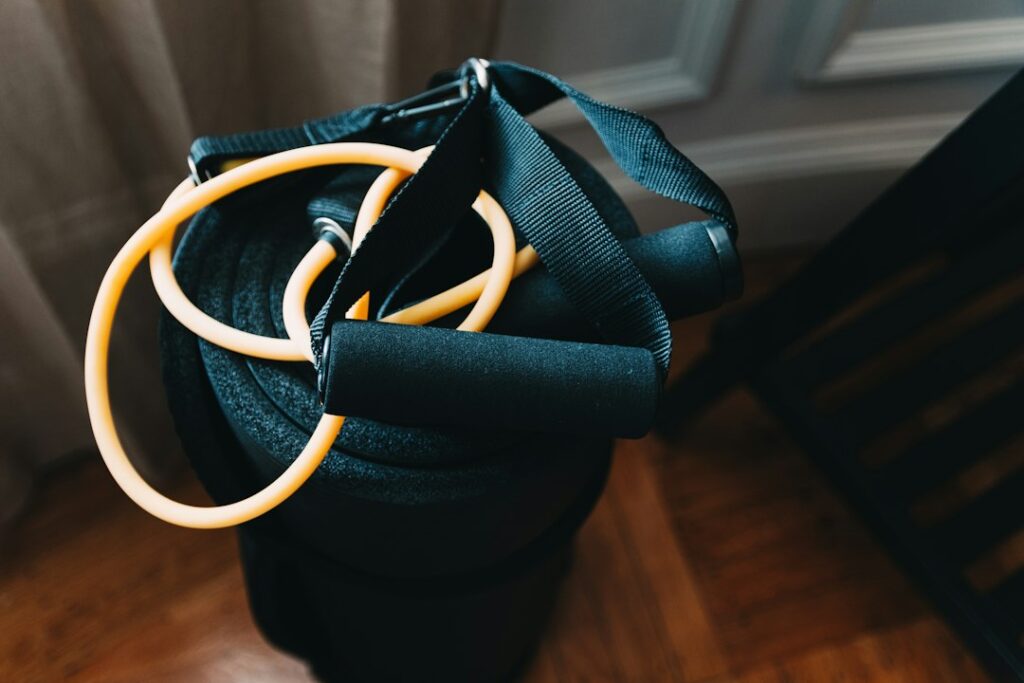
- Rows using a resistance band or securely anchored object
- Planks and controlled leg raises for the trunk
The exercise itself is only part of the process. Each movement should become gradually more challenging.
How does progressive overload work at home?
Progressive overload means increasing the training demand as the body adapts. Without this gradual increase, a routine may improve endurance but stop producing much additional muscle growth.
Progression can be created in several ways:
- Add repetitions while maintaining good form.
- Perform more sets.
- Use a harder exercise variation.
- Slow the lowering phase to three or four seconds.
- Pause briefly at the most difficult point.
- Increase range of motion.
- Add weight to a backpack.
- Reduce rest periods carefully, without turning every set into rushed cardio.
For example, someone who can complete three sets of eight standard push-ups might progress to three sets of twelve. Later, the person could use a backpack with a small amount of weight, elevate the feet, or switch to a slower tempo.
The increase should be gradual. Adding too much difficulty too quickly can lead to joint irritation, poor technique, and missed workouts.
What might a simple weekly routine look like?
A three-day full-body plan is a practical starting point for many adults. Leave at least one rest day between sessions.
Day 1
- Squats: 3 sets of 8–15 repetitions
- Push-ups: 3 sets of 6–15 repetitions
- Glute bridges: 3 sets of 12–20 repetitions
- Band or backpack rows: 3 sets of 8–15 repetitions
- Plank: 3 rounds of 20–45 seconds
Day 2
- Reverse lunges: 3 sets of 8–12 repetitions per leg
- Pike push-ups: 3 sets of 6–12 repetitions
- Single-leg bridges: 3 sets of 8–15 repetitions per leg
- Backpack Romanian deadlifts: 3 sets of 10–15 repetitions
- Side plank: 2–3 rounds per side
Day 3
- Split squats: 3 sets of 8–12 repetitions per leg
- Close-grip push-ups: 3 sets of 6–15 repetitions
- Step-ups: 3 sets of 8–12 repetitions per leg
- Rows: 3 sets of 8–15 repetitions
- Dead bug: 3 sets of 8–12 repetitions per side
These repetitions are general guidelines, not rigid requirements. A set should usually finish with several challenging repetitions still possible. Occasionally training closer to muscular fatigue can be useful, but every set does not need to end with complete exhaustion.
How can household items add resistance safely?
A sturdy backpack can hold books, clothing, or sealed water containers and serve as adjustable resistance. Water jugs may also work for carries, squats, rows, and presses.
Safety depends on stability. Check that:
- The backpack straps are secure.
- The load is balanced and does not shift.
- Containers are sealed.
- Chairs, tables, and railings are stable before using them for support.
- The floor is dry and clear.
- No object is placed overhead unless it is designed to support that use.

Avoid using unstable furniture for dips or elevated exercises. A fall from a chair or table can cause more harm than the exercise is worth.
How much protein is needed to gain muscle?
Most people trying to build muscle benefit from a consistent protein intake spread across the day. A commonly used range for active adults is approximately 1.4 to 2.0 grams of protein per kilogram of body weight daily.
Protein can come from eggs, dairy foods, fish, poultry, lean meats, beans, lentils, tofu, and other soy foods. A meal containing protein after training is useful, but the total amount consumed across the day matters more than a narrow post-workout window.
Muscle gain also requires enough overall food. If calories are consistently too low, strength and recovery may suffer. A modest calorie surplus can support growth, while a person trying to reduce body fat may build muscle more slowly, particularly after the beginner stage.
Does outdoor training work in Atlanta?
Outdoor exercise can complement home training, but local weather deserves attention. Hot, humid conditions can raise fatigue and fluid needs, especially during longer sessions or direct sun exposure.
During warmer periods:
- Train during cooler parts of the day when possible.
- Drink fluids before becoming thirsty.
- Choose shaded areas.
- Reduce intensity if dizziness, chills, nausea, unusual weakness, or confusion develops.
- Allow extra recovery between sets.
Indoor training may be more comfortable during very hot, humid, or stormy weather. A small, well-ventilated space can be enough for a complete workout. Apartment residents should also consider floor noise and use controlled movements rather than jumping when neighbors are nearby.
How often should you train each muscle group?
Training each major muscle group two or three times per week is a reasonable target for many people. Full-body sessions make this easier because the chest, back, shoulders, legs, and core are addressed in the same workout.
Recovery remains part of the program. Most adults need roughly seven to nine hours of sleep, although individual needs vary. Persistent soreness, declining performance, irritability, or poor sleep may indicate that training volume is too high or recovery is inadequate.
A rest day does not have to mean complete inactivity. Walking, gentle mobility work, and normal daily activity can support circulation without placing heavy stress on recovering muscles.
What mistakes slow progress?
The most common problem is repeating the same easy routine for months. If the final repetitions never become challenging, the muscles have little reason to adapt further.
Other frequent mistakes include:
- Using fast, uncontrolled repetitions
- Training only the muscles that are easy to see
- Ignoring pulling exercises for the back
- Changing routines too often to measure progress
- Treating soreness as proof of an effective workout
- Skipping meals or underestimating protein intake
- Adding load before mastering technique
- Comparing home training results with unrealistic online expectations
Track exercises, repetitions, sets, added resistance, and how difficult each set feels. This simple record shows whether the training is actually progressing.
People with a current injury, significant medical condition, or unexplained pain should modify exercise cautiously and seek individualized medical guidance when necessary. Sharp pain, chest symptoms, fainting, or severe shortness of breath are not normal signs of productive training.
A consistent home routine, sufficient food, and gradual increases in difficulty can build meaningful strength and muscle without a gym. The most effective plan is one that fits the available space, household schedule, weather conditions, and ability to recover.